One-Half Century of Adolescent Sleep: Mary Carskadon to Deliver Keynote Lecture at Sleep Europe 2026

Sleep Europe 2026 will welcome Dr. Mary Carskadon, who will deliver the keynote lecture One-Half Century of Adolescent Sleep.”

Although observations of adolescent sleep patterns began more than a century ago, the research field entered a new era in the middle of the twentieth century and continues to the present. In her lecture, Dr. Carskadon will revisit this period of scientific development, drawing on work conducted at Stanford University and later at Brown University to illustrate how understanding of adolescent sleep has evolved.

Reflecting on the field’s progress, she highlights one discovery in particular:

“I think the most important and impactful insight that research has provided about adolescent sleep is that the circadian timing system appears to undergo a change that delays the timing of sleep behaviour. This finding has been corroborated through a number of approaches by a number of research teams, initially through questionnaires and subsequently with biomarkers. Circadian timing is not the only biomarker that is altered during adolescent development, but it was the earliest described and most often supported.”

Adolescents today navigate a complex sleep environment shaped by biological, social, and technological influences. While factors such as digital technology and school schedules often receive public attention, Dr. Carskadon emphasises that underlying biological processes remain central to understanding adolescent sleep patterns.

“Although we can point to the psychosocial and technological factors (among others) that affect adolescent sleep patterns, I place the biological factors as most important. In my thinking, changes in circadian timing and the sleep/wake homeostasis system provide “permission” if not pressure to allow the ‘”intrusive” evening pursuits/distractions. Evening activities are sometimes underrated challenges to sleep, particularly those activities sponsored by the education system. Of course, early morning school schedules comprise a major challenge. I don’t think that research has yet identified a singular causal factor.”

Looking back at decades of work in the field, Dr. Carskadon also hopes that her lecture will carry a message for the next generation of scientists. Beyond the scientific milestones, she emphasises the importance of perseverance and visibility in research careers, particularly for young researchers entering the field.

“I know I’ll be presenting findings from the last millennium that were sometimes challenged by the established wisdom, and I hope that my work can inspire our junior colleagues to pursue their research even if confronted by naysayers. I am hopeful that junior colleagues, especially women will see me and my work as encouragement to pursue their careers in science. Persistence, tenacity, and determination will be required.”

Dr. Mary Carskadon will deliver her keynote lecture, “One-Half Century of Adolescent Sleep,” on Wednesday, 21 October 2026, from 11:45 to 12:30, at Sleep Europe 2026 in Maastricht.

Registration for Sleep Europe 2026 is already open, and the preliminary scientific programme is now available. Follow ESRS on social media and subscribe to the newsletter available through the Scientific Programme page to receive first-hand further updates and highlights from the Congress.
Sleep for Science 2026 Summer Announcement

The E.P. Bradley Hospital Brown University affiliated Sleep Research Laboratory in Providence, RI, announces research apprenticeships available for the summer of 2026.

COMMITMENT: Full-time beginning 25 May 2026* through 19 August 2026

More information and application are available here: http://www.sleepforscience.org/academic/apprenticeship.php

“Reclaiming Teen Sleep: Innovative Biocultural Strategies from the U.S. and Taiwan” with Dr. Jamie M. Zeitzer

The 2025-2026 Thomas F. Anders Seminar Series kicked off with a presentation by Dr. Jamie M. Zeitzer. Dr. Zeitzer is a professor in Psychiatry and Behavioral Science as well as the co-director of the Center for Sleep and Circadian Rhythms at Stanford University. He holds a dual position as a health science specialist at the VA Palo Alto Health Care System. For 30 years, Dr. Zeitzer has conducted research on sleep, circadian rhythms, and the brain’s response to light in a variety of species and experimental paradigms. He has published more than 150 peer-reviewed manuscripts on these topics and lectured internationally about novel ways to manipulate sleep and circadian rhythms. He obtained his PhD in neurobiology from Harvard University and his bachelor’s in biology from Vassar College. His most recent work has focused on optimizing lighting for human health, the role of wearables in sleep, and the interaction of sleep and circadian rhythms.
Abstract
Chronic sleep deprivation among adolescents is a global crisis, with serious consequences for mental health, academic performance, and overall well-being. While biological changes during adolescence are largely universal, cultural and environmental factors play a major role in shaping sleep habits—and solutions. In this talk, I’ll share two cutting-edge, cross-cultural interventions designed to combat teen sleep loss. In the U.S., we’ve developed a novel approach combining passive light flash therapy during sleep with a behavioral intervention to encourage earlier bedtimes—without changing wake times. In Taiwan, we’ve integrated AIoT-powered classroom lighting with in-school mindfulness training to reduce sleep onset delays and improve daily functioning. Both strategies pair passive biological interventions with active behavioral components, aiming to not only extend sleep duration but also boost mood, attention, and academic outcomes. Join me to explore how culturally grounded, science-based innovations can help teens worldwide reclaim the rest they need.

View the 2025 Retreat Colloquium Program

Recently, the COBRE Center hosted the 2025 William C. Dement Sleep and Chronobiology Behavioral Science Research & Bradley Hospital COBRE Center for Sleep and Circadian Rhythms in Child and Adolescent Mental Health Retreat Colloquium

This event included updates from Center Research Project Leaders Drs. Anastasia Kudinova, Giulia Righi, and Rachelle Narcisse.

COBRE Phase 1 progress updates and plans for COBRE Phase II were presented: Pilot Project Program (Dr. Christopher D. Houck), Mental Health Assessment and Technology Research Core (Drs. Jennifer C. Wolff and David H. Barker), Sleep and Circadian Methods Research Core (Drs. Jared M. Saletin, David H. Barker, and Mary A. Carskadon), and the Biomarker Research Core (Dr. John McGeary).

Administrative Supplement Leader, Dr. Katherine M. Sharkey, presented a Dream Team project update, followed by updates from COBRE Pilot Project Leaders Drs. Elizabeth Thompson and Sarah A. Thomas.

The event was enriched by the talks from guest speakers, Dr. Gina Mason and Dr. Michelle Thompson, who presented on their research and career trajectories. Guest of Honor, Catherine Dement Roos, rounded out the event with her inspiring talk reflecting upon her life with and the work of her father, William C. Dement, MD, PhD, a keystone of modern sleep science.

View the 2025 Retreat Colloquium Program

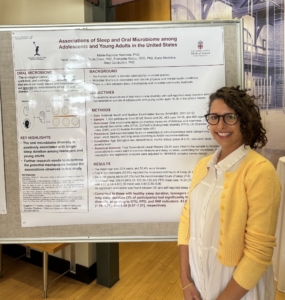
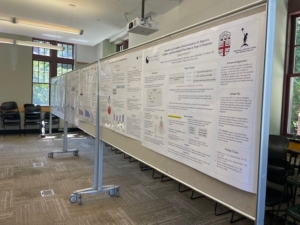
View the 2025 Retreat Colloquium Posters


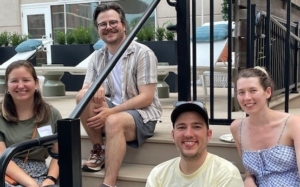
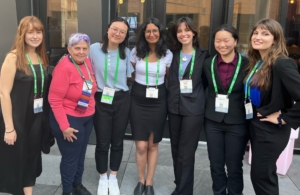
Top left and center: Catherine Dement Roos

Top right: Kiara Medeiros, Research Assistant for Dr. Rachelle Narcisse

Bottom left: Dr. Lindsay Stager, Dr. David Schreier and colleagues

Pilot Research Project Leader Search

Seeking Researchers for Publication Accelerator

Pilot Proposals

Click Here for More Info

Submit Letters of Intent HERE


Conferences & Trainings

Sponsorship Opportunity for Pediatric Behavioral Sleep Medicine Live Webinar Series

Basics & Case-Based (starting Jan 20th)

Apply ASAP- seats and sponsorships are limited

Click Here for More Info


SLEEP 2023

June 3-7, 2023, Indianapolis, IN

The Bradley Sleep Lab faculty, staff, and associates participated in the SLEEP 2023 conference in Indianapolis, IN.

The SLEEP 2023 conference included the latest advances in sleep medicine and sleep and circadian research with a variety of educational formats that appealed to researchers and sleep team members. Session formats included discussion groups, rapid-fire symposia, lunch debates, oral and poster presentations, and clinical workshops.  View the posters of COBRE and Bradley Sleep Lab Staff here.

Data Sharing Resources

NDA Data Sharing Cost Estimator:

[embeddoc url=”https://bradleycobre.org/wp-content/uploads/2023/02/NDA_Data_Submission_Cost_Estimation_Tool.xlsx” download=”all” viewer=”microsoft”]


NDA Data Contribution:

View here


NIH Data Management and Sharing Policy:

View here

National Research Mentoring Network

Free video resources like “Best Practices for Junior Investigators When Writing an NIH Research Grant Application” and more available here.

The mission of the National Research Mentoring Network is to provide researchers across all career stages in the biomedical, behavioral, clinical, and social sciences with the evidence-based mentorship and professional development programming that emphasizes the benefits and challenges of diversity, inclusivity and culture, more here.